BIOMECHANICAL & MOVEMENT ASSESSMENT IN PALATINE, IL
ASSESSING MOVEMENT EFFICIENCY.
Like your car's "multi-point inspection" before a road trip; only it's for your body.

Posture Screen
4 - View
Posture Assessment PDF
ReportComparative report module to objectively gauge progress

Orthopedic Analysis
50+ measurements
Sourced measurements
that have been repeatedly validated by the scrutiny of the scientific method.

Primal Patterns
Overview of Squat, Bend (Deadlift), Lunge, Push, Pull, and Twist
Regressions and Progressions provided
WANT A STRUCTURAL ASSESSMENT? GET IN TOUCH

1 Month Progress
Lost 7 lbs.
Improved weight shift by ~21 lbs. Right to Left
This information is provided by the Bilateral Weight Symmetry Test.
This is measured by standing a client on two separate scales and recording the weight on each leg.
A weight shift of 5 lbs. or more is significant.
Ideal daily walking = 10,000 steps/day = 5000 on each foot.
- In one day, 5000 steps x 5lbs. = ~25,000 lbs. (additionally loaded into one leg).
Walking increases loading by 1-3 times, so that 5lb. shift becomes 25,000 lbs. x 3 = ~75,000 lbs.
Multiply that by one week’s worth of walking = ~525,000 lbs.
Multiply that by one year = ~27,300,000 lbs.
"Tight" isn't a diagnosis
You've felt it: a hip that won't rotate, an ankle that won't bend, a shoulder that pinches overhead. So you stretch more, foam roll, or get a massage. Three weeks later, nothing has changed.
Tightness is a symptom. Without measuring what's actually restricted, and on which side, you end up treating a guess. Limits in one joint don't stay there either. They push the work onto the joints above and below, and those compensations are where injuries tend to start.
What a structural assessment includes
- 4-view posture screen: front, back and both sides, saved in a posture report you can compare against later
- Orthopedic measurements: 50+ measurements drawn from research-validated methods, taken on both sides of the body
- Joint range of motion: including hip internal and external rotation, hip flexion and extension, ankle dorsiflexion (weight-bearing), thoracic rotation and shoulder internal and external rotation
- Muscle length-tension testing: from the big toe to the neck, to find muscles that are too short or too long to produce force well
- Bilateral weight symmetry test: you stand on two scales so we can see how much more weight one leg carries. A shift of 5 lbs or more is significant.
- Primal movement patterns: squat, bend (deadlift), lunge, push, pull and twist, with regressions and progressions for each
Small restrictions, big consequences
Ankles
Limited dorsiflexion is one of the most common things we measure. It changes squat mechanics, sprint acceleration and how you land. A weight-bearing ankle should reach at least 10 degrees. Less than that tends to show up as knee, hip or landing problems.
Hips
Limited hip extension or internal rotation blocks explosive hip drive, and the body makes up for it at the lower back and knees.
Thoracic spine
Your mid-back is built to rotate. When it can't, rotation is forced into the lower back. That matters for throwers, swingers and every athlete who transfers power from the ground up.
Weight shift
A few pounds of extra load on one leg adds up over thousands of steps a day. The worked example above shows how fast it compounds.
Assess → Analyze → Train → Re-test
- Assess. We take your posture screen, measurements, weight symmetry and movement patterns.
- Analyze. You get a report showing where you're restricted, where you're asymmetrical, and what is most likely driving it.
- Train. Your corrective and strength program starts from your actual numbers, not a generic mobility routine.
- Re-test. The same measurements, repeated with the comparative report, show what changed and what still needs work.
Who it's for
- Athletes who want to move more efficiently and lower their injury risk
- Parents who want to catch movement problems before they become injuries
- Adults who want to train, lift and move well for the long term
Why Starke Industries
- Trained in established assessment systems: Tyler holds C.H.E.K. Integrated Movement Science (Levels I–III) and DBC Fitness (Levels I–III) training
- We teach this method: Starke runs a structural assessment course for fitness professionals
- Integrated with your training: results connect with our VALD force plate testing, sensory training, nutrition coaching and recovery
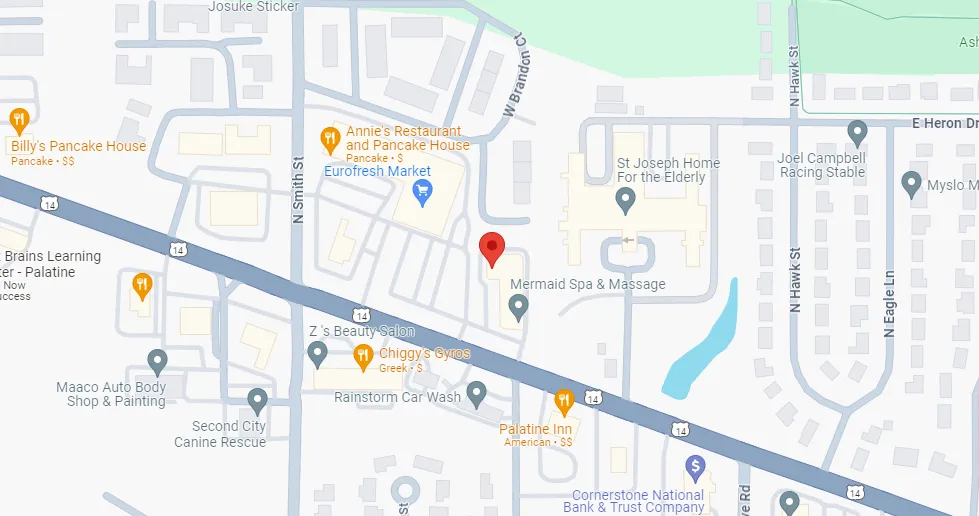
- Local: 122 W Northwest Hwy, Palatine, serving athletes and adults across the northwest suburbs
Biomechanical assessment FAQ
What is a biomechanical assessment?
A structured evaluation of how your body is built and how it moves. It includes posture, joint range of motion, muscle length-tension, weight distribution and movement patterns. It shows where you're restricted or asymmetrical so training can fix the cause, not the symptom.
What do you measure?
A 4-view posture screen, 50+ orthopedic measurements on both sides of the body, muscle length-tension from toe to neck, a bilateral weight symmetry test, and the six primal patterns: squat, bend, lunge, push, pull and twist.
What do I get afterward?
A posture and assessment report, a walkthrough of what the findings mean, and corrective and training recommendations built from your results.
How often should I be re-assessed?
Re-assessing with the same measurements shows whether your restrictions and asymmetries are improving.
Do I need to be an athlete?
No. Athletes use it to move and perform better. Adults use it to train safely and keep moving well as they age.
How do I get started?
Reach out through our contact page or call (847) 750-3025. We'll talk about your goals and set up your assessment at our Palatine facility.
Stop guessing. Measure how you move.
Get assessed, train from your numbers, and re-test to prove it's working.
Get In TouchAbout Us
At Starke Industries, the mission is to bridge the gap between the medical and fitness industries to optimize human performance. As the first stage of preventative medicine, evidence-based practices and comprehensive assessments, create customized data-driven training programs.
This ensures the effectiveness, long-term health and the ability to reach full potential, whether you're an elite athlete or focused on overall fitness.
Contact Us
Copyright© 2026 Starke Industries - All Rights Reserved.