Unlocking Athletic Potential: Utilizing VALD ForceDecks for Data-Driven Program Design
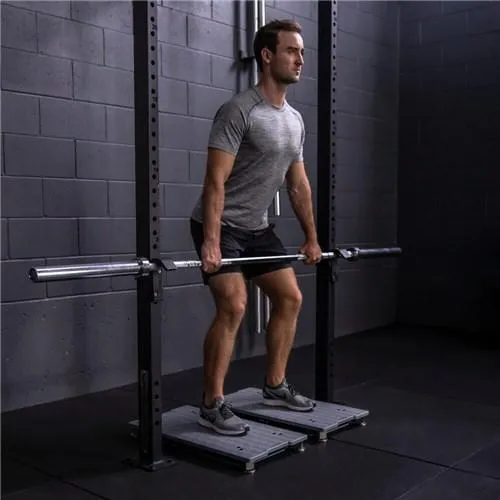
In elite sports performance, tailoring training programs to an athlete’s specific needs is essential for maximizing results. VALD ForceDecks provide the precise data necessary to design these individualized programs, using advanced assessments to measure key performance indicators. By incorporating both base testing and run-specific isometrics, ForceDecks allow coaches to develop targeted, effective training plans.

Base Testing with VALD ForceDecks
Countermovement Jump (CMJ)
Purpose: Measures lower-body power and neuromuscular efficiency through a vertical jump.
Program Impact: Insights from CMJ data guide the development of explosive strength exercises, focusing on enhancing power output in sports requiring rapid movements.
Squat Jump
Purpose: Assesses concentric force production by eliminating the contribution of the stretch-shortening cycle.
Program Impact: Squat jump results help in isolating and improving pure muscle power, aiding in the development of concentric strength-focused training.
10-5 Repeated Hop Test
Purpose: Evaluates reactive strength and endurance by measuring the ability to repeatedly produce force with minimal ground contact.
Program Impact: This test informs the design of plyometric training programs that aim to enhance an athlete's reactive strength and reduce ground contact time.
Isometric Mid-Thigh Pull (IMTP)
Purpose: Measures maximal isometric strength and rate of force development.
Program Impact: IMTP data is crucial for understanding an athlete’s peak force capabilities, leading to strength-focused programs that improve overall power output.
Run-Specific Isometrics with VALD ForceDecks
Ankle Iso-Push
Purpose: Assesses the force generation capacity of the ankle joint, crucial for running and change of direction.
Program Impact: Data from the ankle iso-push can inform the design of training protocols aimed at improving lower-leg strength and reducing injury risk.
Knee Iso-Push
Purpose: Evaluates the strength and stability of the knee joint under isometric conditions.
Program Impact: By focusing on knee iso-push data, coaches can tailor strength training to enhance knee stability, crucial for sports that involve frequent sprinting and sudden stops.
Hip Iso-Push
Purpose: Measures the strength of the hip extensors, critical for acceleration and top-end speed.
Program Impact: Hip iso-push results guide the development of programs aimed at improving hip extension strength, directly benefiting running speed and agility.
Final Thoughts
VALD ForceDecks offer a powerful tool for designing data-driven training programs that are finely tuned to an athlete’s individual needs. By utilizing both base testing and run-specific isometrics, coaches can gain a comprehensive understanding of an athlete’s strengths and areas for improvement. This precise data enables the creation of targeted training protocols that enhance performance, reduce injury risk, and ensure that athletes are always progressing toward their goals. As the integration of technology in sports continues to grow, tools like VALD ForceDecks will be indispensable in driving athletic excellence.
Keep Reading:
The Versatility of VALD Dynamo: Portable and Powerful Testing for Athletes
The Science Behind Personalization
Enhancing Performance Programs with Velocity Based Training
Ready for data-driven program design? Our VALD ForceDecks Testing creates a personalized strength and power development roadmap. Book your ForceDecks assessment →
Master advanced program design methodology →