Early Sport Specialization: What the Research Says | Starke Industries
More families are asking the same question: should my child focus on one sport to get ahead? Club seasons now overlap, and many young athletes play one sport year-round by middle school.
This post summarizes what the research says, with care to separate what's known from what's assumed.
What "specialization" means
Sport specialization usually means intense, year-round training in a single sport, often at the expense of other sports. It sits on a continuum. Playing one main sport while doing others casually is very different from training one sport 11 months a year.
What the research says
Jayanthi et al. (2013). This review in Sports Health looked at the evidence on specialization in young athletes [1]. Its key findings:
• For most sports, there's no evidence that intense training and specialization before puberty are necessary to reach elite status [1].
• Risks reported with early specialization include higher rates of injury, increased psychological stress, and quitting sport at a young age [1].
• Some specialization is necessary for elite skill development, but for most sports, intense single-sport training should be delayed until late adolescence [1].
IOC consensus statement on youth athletic development (2015). The International Olympic Committee critically evaluated youth athlete development and presented recommendations for developing healthy, resilient, and capable youth athletes while providing opportunities for all levels of participation [2].
NSCA position statement on long-term athletic development (2016). The NSCA notes that young athletes who face high volumes of competition without preparatory conditioning are often physically underprepared and at risk of overuse injury [3].
Reading the evidence carefully
Much of the specialization research is observational. When studies find that specialized athletes report more injuries, that's an association. It doesn't prove specialization alone caused those injuries. Training volume, competition load, and individual factors are tangled together.
What's reasonably clear: there's little evidence that early specialization is required to succeed in most sports, and there are reasons for caution.
What this means for families
• Variety has value. Playing different sports exposes athletes to different movements and demands.
• Watch total volume. A young athlete on a club team, a school team, and private lessons may be training far more than anyone realizes.
• Plan rest. Time away from a sport, physically and mentally, is part of development.
• Keep it enjoyable. Quitting sport young is one of the outcomes associated with early specialization [1].
• Build general athleticism. Strength, speed, coordination, and mobility support every sport.
• Talk with coaches. Share the full schedule so everyone knows the total load the athlete is carrying.
Where strength and conditioning fits
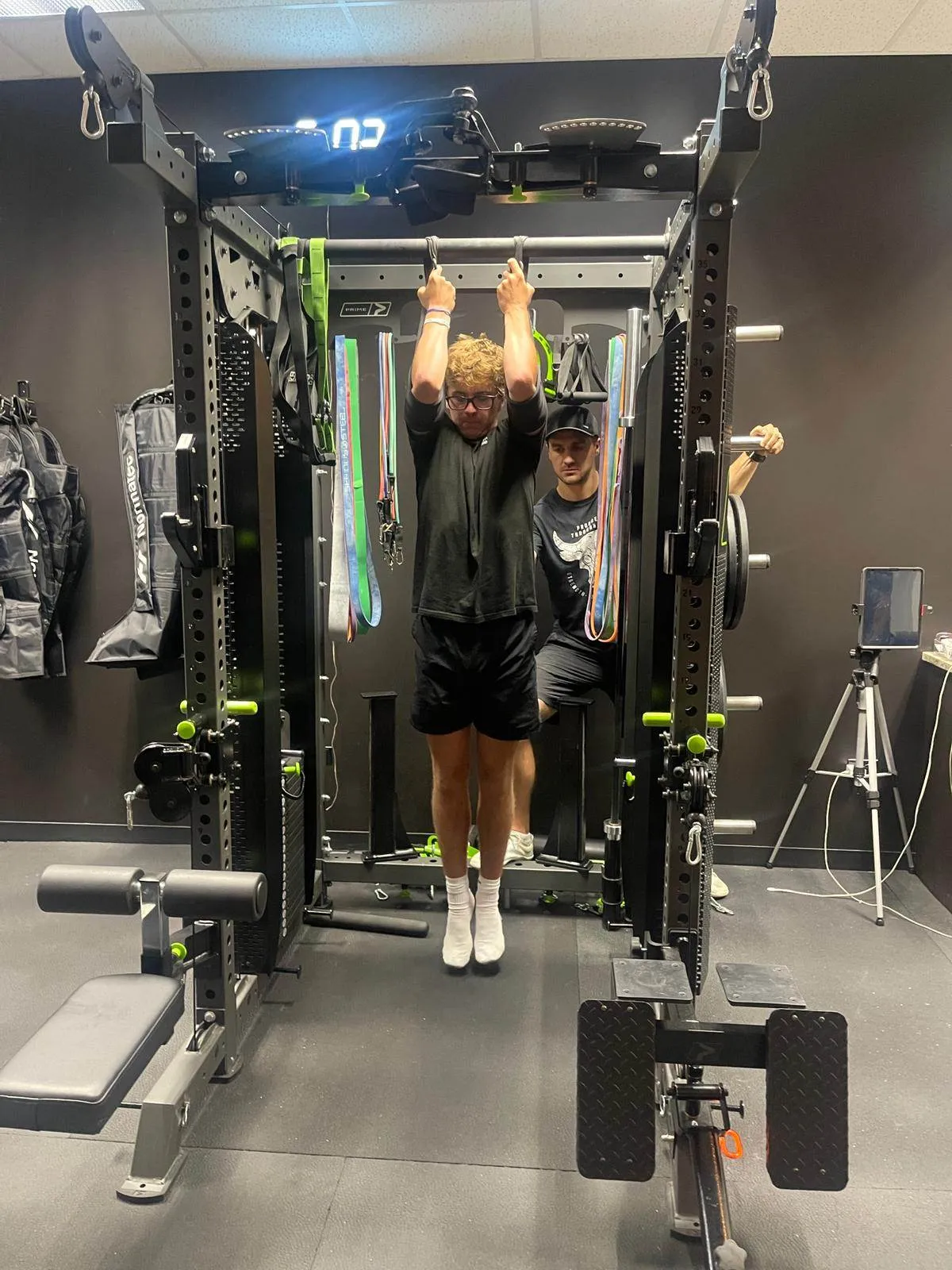
Athletes who specialize still benefit from general athletic development. A soccer player who only plays soccer misses some of the movement variety other sports provide. Structured strength and conditioning can fill some of that gap with jumping, landing, sprinting, strength in multiple directions, and upper-body work.
That's where Starke Industries fits for many families. Testing gives a starting point, and training builds the qualities a single sport may not develop.
Questions parents ask
My child's coach says they need to play year-round to make varsity. Is that true? For most sports, the research doesn't show that intense year-round training before puberty is needed for elite status [1]. Decisions in the high school years are more individual. Talk openly with the coach about total load and rest.
My child only wants to play one sport. Should I force them to play others? Not necessarily. Enjoyment matters. You can still manage total volume, schedule breaks, and add general athletic training.
When does specializing make sense? The Jayanthi review suggests delaying intense single-sport training until late adolescence for most sports [1]. Some sports with early peak ages may differ.
Signs the load may be too much
These aren't diagnoses, but they're worth a conversation:
• Ongoing soreness or pain that doesn't settle with rest
• Losing interest in a sport they used to love
• Persistent tiredness or trouble sleeping
• Dread before practice or games
Any persistent pain should be checked by a qualified medical professional. Psychological stress and burnout are real, and the Jayanthi review lists them among the risks associated with early specialization [1].
A balanced year
One approach many families use: a main sport, one or two other sports or activities during the year, and planned breaks from organized sport. General strength and conditioning can run alongside, adjusted to each season.
The bottom line
For most young athletes, there's little evidence that early, intense specialization is necessary, and there are reasons to be careful. Variety, sensible total volume, planned rest, and general athletic development give young athletes the best foundation, whatever sport they end up in.
Related reading
- Summer Off-Season Training for High School Athletes: How to Plan the Break
- Training in the Heat: Heat Illness Basics for Summer Workouts
- Squat Jump vs. Countermovement Jump: What the Difference Tells You
- Single-Leg vs. Double-Leg Jumps: Why Test Both
- Sprint Testing 101: 10 m, 20 m, and the 40-Yard Dash
- Back to School: Getting Ready for Fall Sports Tryouts
- The Nordic Hamstring Exercise: What the Research Says
- The Copenhagen Adductor Exercise for Field and Ice Athletes
References
- Jayanthi N, et al. Sports specialization in young athletes: evidence-based recommendations. Sports Health. 2013;5(3):251–257. https://doi.org/10.1177/1941738112464626 (online Oct 25, 2012)
- Bergeron MF, et al. International Olympic Committee consensus statement on youth athletic development. Br J Sports Med. 2015;49(13):843–851. https://doi.org/10.1136/bjsports-2015-094962 (online Jun 17, 2015)
- Lloyd RS, et al. National Strength and Conditioning Association position statement on long-term athletic development. J Strength Cond Res. 2016;30(6):1491–1509. https://doi.org/10.1519/JSC.0000000000001387 (published Jun 2016)
- ---
Fill out our quick contact form at starkeit.com/contact, or call or text (847) 750-3025. Starke Industries is in Palatine, IL.