
Find Everything You
Need.
Assessment

Let's Make Your Vision A
Reality
At Starke Industries, we specialize in customizable promotional items designed to elevate your brand's visibility. With a wide range of products tailored for effective marketing campaigns, we empower businesses to make a lasting impression on their audience.
Our mission is simple: to provide innovative marketing solutions that meet and exceed our clients' needs. From branded apparel to tech gadgets, we offer a diverse selection of practical and memorable promotional items for every occasion.
Your Customizable Marketing Merchandiser
Elevate Your Brand and Leave a Lasting Impression with Personalized Promotional Solutions Tailored to Your Business Needs. Stand Out in the Market, Engage Your Audience, and Drive Results with Customizable Merchandise from BrandBoost.
Frequently Asked Question
Can I customize the promotional items with my company logo?
Yes, we offer customization options to showcase your brand identity.
What types of promotional items do you offer?
We provide a diverse range of customizable merchandise for marketing.
What is the minimum order quantity for personalized items?
Minimum order quantities vary depending on the selected product.
How long does it take to receive my customized items?
Production times vary but are typically within 7-10 business days.
Do you offer rush shipping options for urgent orders?
Yes, we offer expedited shipping options for time-sensitive orders.
See Our Latest Blogs
Stay up-to-date with our latest insights, tips, and trends by diving into our newest blogs. Whether you're seeking industry expertise, marketing strategies, or product inspiration, our blog section is your go-to resource for valuable content.
Force Plate Testing for Athletes: What Your Countermovement Jump Data Really Means
Most athletes train power. Very few ever measure it. So how do you know if you're actually getting more powerful?
You might have a gut feeling based on how you feel in the gym or on the field. You might see your vertical jump go up an inch. But feelings and eyeballs aren't data. They're assumptions.
Force plate testing removes the guesswork. It shows you exactly what's limiting your speed and power—then tells you what to train.
By the end of this post, you'll understand what a countermovement jump test measures, how to read the numbers, and why the data should drive your training program.
What Is Force Plate Testing?
A force plate is a piece of equipment that measures the force your body produces when you jump, push, or move explosively.
Here's what happens: You stand on the plate. You perform a specific movement—like a jump. The plate captures how much force you generate, how quickly you generate it, and how your body distributes that force. That data comes back in milliseconds as a graph and a set of numbers.
Force plates aren't theoretical. They're used by strength coaches, power athletes, and sports science teams worldwide because they answer one question that matters: Are you actually powerful?
Not "do you feel powerful." Actual, measurable power output.
The testing can be simple—a single vertical jump—or complex, involving multi-direction movements that replicate your sport. Either way, you get objective data about your neuromuscular system: your muscles, your nervous system, and how they work together.
The Countermovement Jump: What It Reveals About Your Power
The countermovement jump (CMJ) is the most common force plate test. Here's why it works.
You start standing. You dip down—that's the countermovement. Then you explode upward as fast as possible. The force plate captures everything: how much force you produce, how fast you produce it, and how high you jump.
Why does this matter?
The countermovement jump tests what researchers call the stretch-shortening cycle (SSC). Your muscles lengthen during the dip, then shorten explosively during the jump. This is how your body generates power in real sports—sprinting, jumping, cutting, throwing. The CMJ mimics that pattern.
So when a force plate measures your CMJ, it's measuring something that directly applies to your sport performance. It's not a lab test that's disconnected from real movement. It's a test of actual power production.
The data tells you whether you're truly developing the neuromuscular qualities that make athletes fast and explosive. If your power numbers aren't improving, neither is your speed or your ability to dominate your sport, no matter what the eye test says.
Key Metrics: What the Numbers Mean
Force plate tests give you several numbers. Most athletes don't know what they mean. Here are the ones that matter.
Peak Force (PF)
Peak force is the maximum amount of force your body produces during the jump. It's measured in Newtons or as a multiple of your body weight.
Why it matters: Higher peak force means more power. If your peak force is low, you need to train maximum strength. If it's high but your jump height is still low, the problem is somewhere else—likely how quickly you produce that force.
Rate of Force Development (RFD)
This is how fast you produce force. Specifically, it's how much force you generate in a given time window—usually measured as force at 100 milliseconds or 200 milliseconds into the movement.
Why it matters: In sports, you rarely have time to produce maximum force. You have 100–300 milliseconds to generate power before your foot leaves the ground in a sprint or before you jump. RFD measures explosiveness. Low RFD means you're not recruiting your muscles fast enough. You need power training, not just strength training.
Reactive Strength Index (RSI)
RSI compares how much force you produce to how quickly you produce it. A high RSI means you're efficient—you generate a lot of force very quickly.
Why it matters: RSI is one of the best predictors of sports performance, especially in sprinting and jumping. If your RSI is low, you're wasting energy in the countermovement phase instead of translating it into power. It tells you whether you need to improve your elastic power (how well you use the stretch-shortening cycle).
Asymmetry
Asymmetry measures the difference between your left and right sides. Most athletes have some asymmetry. The question is how much.
Why it matters: Large asymmetries (more than 10% difference between sides) increase injury risk and limit performance. If one leg produces more power than the other, you're not running or jumping at your best. You need to address it before it becomes a problem. Asymmetry data tells you whether you need single-leg work or whether an imbalance is significant enough to require intervention.
The Squat Jump vs. CMJ: Why Both Matter
The squat jump (SJ) is different from the countermovement jump. In a squat jump, you start in a quarter-squat position, pause for two seconds, then jump. There's no countermovement.
The CMJ uses the countermovement. The squat jump doesn't.
Why test both?
The difference between your SJ and CMJ tells you about elastic power. If your CMJ is much higher than your SJ, you have good elastic power—you use the stretch well. If they're similar, you're not using that stretch effectively. You're relying on pure strength.
This matters because elastic power is trainable. If the gap is small, adding plyometrics, fast eccentric training, or reactive drills can improve your CMJ significantly. If the gap is already large, you might focus on strength and RFD instead.
Force plate testing of both jumps gives you a roadmap for what to train.
How Force Plate Data Changes Your Training Program
Data without application is just numbers. The real value comes when you use it to change what you do.
Here's how it works:
If your peak force is low, you need heavy strength work—squats, deadlifts, loaded movements. You need to build the capacity to produce force.
If your peak force is high but your RFD is low, you need explosive training—Olympic lifts, plyometrics, fast movements. You need to teach your nervous system to recruit muscles quickly.
If your RSI is low, you need reactive training—jump-based work, landing drills, elastic exercises that use the stretch-shortening cycle efficiently.
If your asymmetry is significant, you need single-leg or unilateral work to balance the sides.
Without force plate data, you're guessing. You might do generic power training that doesn't address your specific limiters. With data, you train exactly what you need.
This is why VALD ForceDecks for program design matters. The testing identifies your specific weaknesses, and the program is built around what the data shows, not general assumptions.
What VALD ForceDecks Measure at Starke Industries
At Starke Industries, we use VALD ForceDecks—the gold standard for force plate testing in sports. Here's what it captures.
Countermovement Jump
The baseline. How much force you produce, how quickly, and how high you jump. This is your power baseline.
10-5 Hop Test
This measures reactive strength and elastic power. You perform a series of hops with minimal ground contact time. The test measures how much force you produce and how quickly you produce it in a rapid, reactive pattern. It's closer to sport-specific demands than a single jump.
Isometric Mid-Thigh Pull
This is a static strength test. You pull against a fixed bar at knee level with maximum effort. It measures your maximum force production without any movement. It's excellent for identifying peak force capacity and neurological readiness to produce force.
Run-Specific Isometrics
These measure force production in positions specific to sprinting and running. They tell you whether your strength in the gym translates to sport-specific power.
The combination of these tests gives a complete picture of your power, your speed, and where you need to improve.
Putting It All Together
Force plate testing alone doesn't change anything. The process does.
Here's the Starke Industries model: Assess. Train. Re-test.
First, we test you with VALD ForceDecks. We measure your power output, your asymmetries, your reactive strength, and your neuromuscular readiness.
Second, we build a training program based on what the data shows. If you need more RFD, the program prioritizes explosive work. If asymmetry is the limiter, single-leg training becomes a focus. Your program is specific to your data, not generic.
Third, we re-test. Usually after 6–8 weeks. You see whether the program worked. You see the actual change in your power numbers. That's how you know if you're getting more powerful, or just training harder.
This approach also works with velocity-based training and VALD Dynamo strength testing. The principle is the same: measure, program based on data, verify the result.
Your power isn't built on assumptions. It's built on what the testing shows and what the programming addresses.
The Difference Between Measurement and Guessing
Training is guessing if you don't measure.
You might have spent months increasing your squat or adding plyometric work. You might feel stronger. But is your power actually improving? Are you faster? Are you jumping higher?
Force plate testing answers those questions in seconds. It tells you what's limiting you. It tells you what to train. And after the training, it tells you whether it worked.
Athletes who measure their power improve their power. It's that simple.
The countermovement jump test is the fastest way to get that data. It takes 30 seconds. The information drives months of training decisions.
Most athletes skip this step. They train blind. You don't have to.
Ready to Measure Your Power?
Starke Industries uses VALD ForceDecks to measure your power output, asymmetries, and neuromuscular readiness—then builds a training program around what the data shows.
No guessing. No generic programming. Just assessment, targeted training, and re-testing to prove the result.

About Us
At Starke Industries, the mission is to bridge the gap between the medical and fitness industries to optimize human performance. As the first stage of preventative medicine, evidence-based practices and comprehensive assessments, create customized data-driven training programs. This ensures the effectiveness, long-term health and the ability to reach full potential, whether you're an elite athlete or focused on overall fitness.


Contact Us
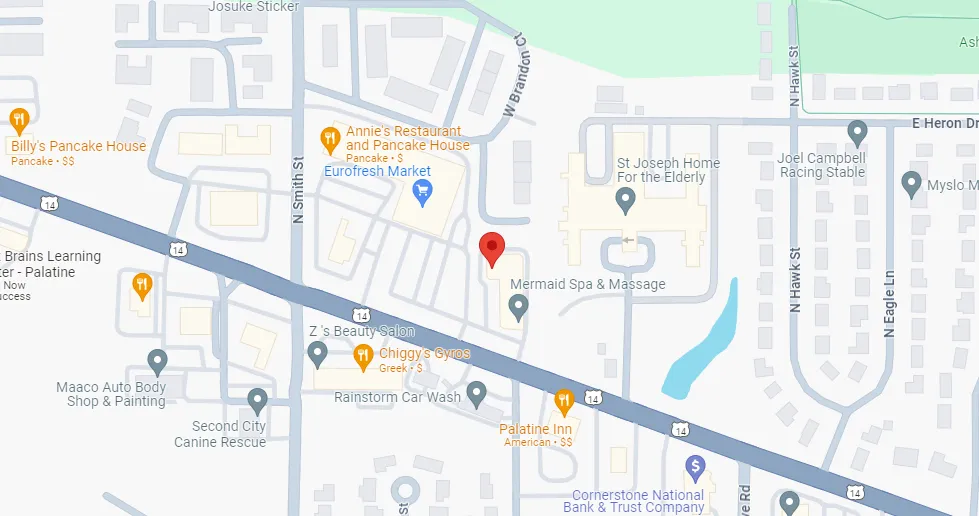
122 West Northwest Highway, Palatine IL 60067
Phone: (847) 750-3025
Email: tyler@starkeit.com
Copyright© 2026 Starke Industries - All Rights Reserved.