Find Everything You
Need.
Assessment

Let's Make Your Vision A
Reality
At Starke Industries, we specialize in customizable promotional items designed to elevate your brand's visibility. With a wide range of products tailored for effective marketing campaigns, we empower businesses to make a lasting impression on their audience.
Our mission is simple: to provide innovative marketing solutions that meet and exceed our clients' needs. From branded apparel to tech gadgets, we offer a diverse selection of practical and memorable promotional items for every occasion.
Your Customizable Marketing Merchandiser
Elevate Your Brand and Leave a Lasting Impression with Personalized Promotional Solutions Tailored to Your Business Needs. Stand Out in the Market, Engage Your Audience, and Drive Results with Customizable Merchandise from BrandBoost.
Frequently Asked Question
Can I customize the promotional items with my company logo?
Yes, we offer customization options to showcase your brand identity.
What types of promotional items do you offer?
We provide a diverse range of customizable merchandise for marketing.
What is the minimum order quantity for personalized items?
Minimum order quantities vary depending on the selected product.
How long does it take to receive my customized items?
Production times vary but are typically within 7-10 business days.
Do you offer rush shipping options for urgent orders?
Yes, we offer expedited shipping options for time-sensitive orders.
See Our Latest Blogs
Stay up-to-date with our latest insights, tips, and trends by diving into our newest blogs. Whether you're seeking industry expertise, marketing strategies, or product inspiration, our blog section is your go-to resource for valuable content.
Breathing for Athletic Performance: Why Paul Chek's First Pillar Matters
You're lifting heavy. You're moving fast. You're doing everything your program says. But you're still not hitting your targets.
Most coaches look at your program. They check your form. They measure your recovery metrics.
Nobody looks at how you're breathing.
Your breathing pattern is the single most controllable element of your nervous system. It shapes how your body produces force, how quickly it recovers, and whether your training actually sticks. Yet most athletes never assess it. They certainly never train it.
Paul Chek—the biomechanist and corrective exercise specialist who built the CHEK Institute—put breathing at the foundation of everything. Not as an afterthought. Not as a wellness add-on. As the first pillar.
He was right.
What Is Paul Chek's First Pillar, and Why Does Breathing Come First?
The CHEK Institute's 6 Pillars framework is built like a structure. Each pillar supports the ones above it. The foundation is breathing.
This isn't poetry. This is mechanics.
Your breathing does three jobs at once:
Gas exchange — You're trading CO2 for oxygen to fuel your muscles.
Nervous system regulation — Your breath controls whether you're in sympathetic (fight-or-flight) or parasympathetic (rest-and-digest) mode.
Core stabilization — Your diaphragm is part of your deep core. It braces your spine during every movement.
Break your breathing pattern, and all three systems fail. You get less oxygen where you need it. Your nervous system stays locked in fight-or-flight. Your spine loses stability.
The result? Poor force production. Slow recovery. Injury risk that climbs every week.
Chek's insight was simple: Fix the foundation first. Everything else depends on it.
When you understand Paul Chek's full framework, you see that breathing isn't separate from strength training or mobility or rest and recovery. It's the mechanism that makes those things work.
How Breathing Affects Your Nervous System and Recovery
Here's the mechanism most athletes miss: Your breath is the only autonomic function you control.
Your heart rate, your digestion, your hormone release—these happen automatically. Your breathing happens automatically too. But you can override it.
When you override your breathing in the right way, you change your nervous system state.
The sympathetic-parasympathetic axis
Shallow, fast breathing (chest breathing) triggers your sympathetic nervous system. Your body thinks there's a threat. Cortisol rises. Blood vessels constrict. Digestion stops. You're ready to fight or run.
This is useful if a predator is chasing you. It's not useful if you're trying to recover from training.
Deep, slow breathing (diaphragmatic breathing) activates your parasympathetic nervous system. Your vagus nerve—the primary nerve of parasympathetic control—responds directly to slow exhalations. Your heart rate drops. Digestion restarts. Cortisol falls. Your body builds muscle and repairs tissue.
Most athletes live in sympathetic dominance. Long work hours. Constant digital stimulation. High-intensity training without adequate parasympathetic recovery. The result: elevated resting heart rate, poor sleep, slow recovery, and injuries that should never happen.
The CO2 tolerance connection
Your breathing also sets your CO2 tolerance. This is how much carbon dioxide your blood can hold before you feel the urge to breathe.
High CO2 tolerance means you can work harder before feeling breathless. It means your muscles extract oxygen more efficiently—even at lower oxygen levels. It means you recover faster between efforts because your nervous system isn't spiking into panic.
Low CO2 tolerance means you breathe faster, your nervous system stays elevated, and your recovery never really comes.
This is trainable. But first, you have to measure it.
What Most Athletes Get Wrong About Breathing
Mistake 1: Breathing through your mouth during training.
Mouth breathing floods your system with oxygen fast. This sounds good. It's not.
Nasal breathing is a filter. It warms air, humidifies it, and delivers it slowly. Nasal breathing also produces nitric oxide in your nasal sinuses, which dilates blood vessels and improves oxygen absorption.
Mouth breathing does none of this. It elevates your breathing rate and keeps you in a sympathetic state.
During training, especially high-intensity work, mouth breathing is often unavoidable. But the default should be nasal. Most athletes have it backwards.
Mistake 2: Breathing from your chest, not your diaphragm.
Your diaphragm is a muscle. When it contracts, it pulls your ribcage down and your abdomen out. This creates negative pressure in your lungs, pulling air in.
Your intercostal muscles (between your ribs) are secondary breathers. They're meant for emergency situations when you need maximum speed.
Most athletes use their intercostal muscles as primary breathers. This keeps them in a partial stress response all day.
You can feel the difference: Put your hand on your chest and one on your belly. When you breathe, does your chest rise first or your belly? If your chest rises first, you're chest breathing. Your diaphragm is asleep.
Mistake 3: Never assessing your baseline.
You measure your squat depth. You measure your vertical jump. You measure your body composition.
How many athletes measure their breathing quality? Almost none. Then they wonder why their training doesn't stick.
How to Assess Your Own Breathing Quality
You don't need expensive equipment to start. You need one number: your BOLT score.
BOLT stands for "Body Oxygen Level Test." It measures how long you can comfortably hold your breath after a normal exhale.
Sit quietly for five minutes. Your breathing should be normal and relaxed.
Take a normal breath in through your nose.
Exhale normally through your nose.
Hold your nose and count how many seconds pass before you feel the urge to breathe.
The moment you feel that urge, you stop counting. That's your BOLT score.
How to interpret it:
BOLT score below 20 seconds: Your CO2 tolerance is low. Your nervous system is sympathetic-dominant. Start here.
BOLT score 20–40 seconds: Normal range. You have room to improve, especially for athletic performance.
BOLT score above 40 seconds: High CO2 tolerance. Your breathing is training your nervous system well.
At Starke Industries, we use the MIR Spirobank II to measure your actual respiratory function: your FEV1 (forced expiratory volume), your vital capacity, and how these compare to your body size and age. We also conduct CO2 tolerance testing in a controlled environment.
How to Train Your Breathing
Start with diaphragmatic breathing.
Lie on your back. Knees bent, feet flat.
Place one hand on your chest, one on your belly.
Inhale through your nose for a count of 4. Your belly should rise. Your chest should stay still.
Exhale through your nose for a count of 4.
Do this for 5 minutes, twice per day.
Progress to nasal breathing during training. During warm-ups and low-intensity work, breathe exclusively through your nose. This keeps your sympathetic nervous system from spiking. During high-intensity work, you'll need to mouth breathe sometimes. But return to nasal breathing as soon as the intensity drops.
Box breathing for nervous system reset.
Inhale through your nose for a count of 4.
Hold for a count of 4.
Exhale through your nose for a count of 6.
Hold for a count of 4.
Repeat for 5 minutes.
For mastering your CO2 tolerance, check out our detailed guide on mastering your CO2 tolerance.
Keep Reading:
The Power of Breath: A Holistic Approach to Health and Wellness
CHEK 6 Principles of Health: A Holistic Approach to Vitality
Why Rest and Recovery Are the Fifth Pillar of Health
Breathing is the first pillar because it's the foundation. Everything else depends on it. Book your performance assessment at Starke Industries →
Learn the science of breathing and performance in our online courses →

About Us
At Starke Industries, the mission is to bridge the gap between the medical and fitness industries to optimize human performance. As the first stage of preventative medicine, evidence-based practices and comprehensive assessments, create customized data-driven training programs. This ensures the effectiveness, long-term health and the ability to reach full potential, whether you're an elite athlete or focused on overall fitness.


Contact Us
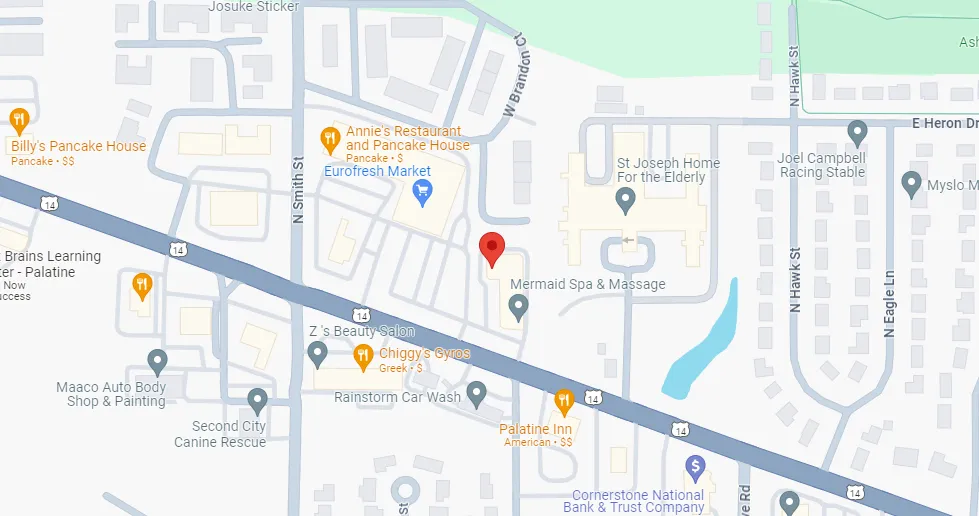
122 West Northwest Highway, Palatine IL 60067
Phone: (847) 750-3025
Email: tyler@starkeit.com
Copyright© 2026 Starke Industries - All Rights Reserved.