
Find Everything You
Need.
Assessment

Let's Make Your Vision A
Reality
At Starke Industries, we specialize in customizable promotional items designed to elevate your brand's visibility. With a wide range of products tailored for effective marketing campaigns, we empower businesses to make a lasting impression on their audience.
Our mission is simple: to provide innovative marketing solutions that meet and exceed our clients' needs. From branded apparel to tech gadgets, we offer a diverse selection of practical and memorable promotional items for every occasion.
Your Customizable Marketing Merchandiser
Elevate Your Brand and Leave a Lasting Impression with Personalized Promotional Solutions Tailored to Your Business Needs. Stand Out in the Market, Engage Your Audience, and Drive Results with Customizable Merchandise from BrandBoost.
Frequently Asked Question
Can I customize the promotional items with my company logo?
Yes, we offer customization options to showcase your brand identity.
What types of promotional items do you offer?
We provide a diverse range of customizable merchandise for marketing.
What is the minimum order quantity for personalized items?
Minimum order quantities vary depending on the selected product.
How long does it take to receive my customized items?
Production times vary but are typically within 7-10 business days.
Do you offer rush shipping options for urgent orders?
Yes, we offer expedited shipping options for time-sensitive orders.
See Our Latest Blogs
Stay up-to-date with our latest insights, tips, and trends by diving into our newest blogs. Whether you're seeking industry expertise, marketing strategies, or product inspiration, our blog section is your go-to resource for valuable content.
Re-Testing: Prove Your Training Actually Works
You've been training for 10 weeks. You feel faster. Your joints feel better. You're lifting heavier weights. But you have no idea if any of it actually worked.
This is the reality for most athletes. They complete a training block, experience subjective changes, and move forward—or quit—without objective evidence of what happened. They have feelings. They don't have data.
Re-testing fixes this. It's the moment you measure yourself using the exact same protocols as your baseline assessment. You get numbers. You compare them to before. You learn whether your training actually delivered measurable change.
This is not just a checkpoint. Re-testing is the only way to know if your program is working, if your body is responding, or if something needs to change. At Starke Industries, re-testing is the foundation of evidence-based training. It's the final step in the framework every Starke course uses: Assess → Analyze → Train → Re-test. This cycle applies whether you're improving range of motion in Own Your Motion, building force output in the Strength & Power course, or developing rate of force development in Speed Development. Here's why re-testing matters—and what to do with the results.
Why "Feeling Better" Is Not Data
Subjective feedback is real. If you feel stronger, that's valuable information. But feelings are influenced by familiarity, expectation, confidence, and a dozen other factors that have nothing to do with actual physical change.
An athlete might feel faster because they're more confident, not because they're more powerful. They might feel stronger because they're familiar with the movement, not because they've gained force output. They might feel less pain because they've adapted to the movement, not because their mobility actually improved.
These feelings matter for daily experience. They don't answer the fundamental question: Did my body change?
Objective measurement answers it. When you re-test using the same equipment and protocols as your baseline, you get numbers that can't be argued with:
ROM improved 12 degrees.
Vertical jump increased 3 centimeters.
Asymmetry dropped from 23% to 14%.
Peak force increased 180 newtons.
These numbers show real change. They also show the direction and magnitude of that change. That's what allows you to make informed decisions about your program. Each Starke course builds in specific re-test benchmarks so you know exactly what to look for—whether it's ROM gains from Own Your Motion, force metrics from the Strength & Power course, or RFD improvements from Speed Development.
What Re-Testing Actually Measures
Re-testing uses the same protocols as your baseline assessment. At Starke, that means:
Range of Motion (ROM): Bilateral measurements of key joints—hip internal/external rotation, shoulder IR/ER, ankle dorsiflexion, thoracic rotation. You're measuring quality and symmetry of movement capacity. This is the core focus of Own Your Motion re-testing.
Force Plate Profiling: Jump height, force output, power production, and asymmetry. You're measuring your ability to produce and direct force—in both single and double-leg positions. The Strength & Power course emphasizes these metrics for building absolute strength and power output.
Asymmetry Tracking: The difference between your left and right side, measured as a percentage. Most athletes have asymmetry. Re-testing shows whether it's improving, staying the same, or getting worse. This applies across all three courses as a universal metric of balance and injury risk.
These measurements aren't fancy. They're specific and repeatable. That's what makes them useful. As covered in our detailed posts on baseline testing, force plate testing, and asymmetry, each measurement tells a specific story about your progress.
Compare this to what most athletes measure: "I ran faster because my watch said so" or "I felt like I lifted heavier." Those aren't controlled measurements. They're snapshots of one day, one movement, one workout.
Re-testing removes the noise. You measure in the same environment, using the same equipment, following the same protocols. You can trust the comparison.
What Good Progress Actually Looks Like in Data
Progress isn't universal. Different athletes improve at different rates. Without data, you can't tell the difference between an athlete who's responding slowly and an athlete whose program is wrong.
Here's what data reveals:
Standard progress over 10 weeks: - ROM improvements of 8–15 degrees in restricted ranges - Vertical jump increases of 2–5 centimeters - Asymmetry improvements of 5–10 percentage points - Force output increases of 5–15%
Exceptional progress (high responders): - ROM improvements of 15+ degrees - Vertical jump increases of 6+ centimeters - Asymmetry dropping 10+ percentage points - Force output increases of 15+%
Stalled progress (non-responders or wrong program): - No ROM change or minimal change (0–3 degrees) - No jump height change or increase under 1 centimeter - Asymmetry staying the same or getting worse - Force output flat or down
This is where re-testing becomes valuable. If your athlete re-tests and shows stalled progress, you know something needs to change. The program might not match their needs. Compliance might be an issue. The intensity might be too low. Recovery might be inadequate.
Without re-testing, you'd never know. You'd assume they're "slow responders" and continue the same program for another 8–12 weeks, wasting time.
The Concrete Example: What One Re-Test Result Actually Means
Let's walk through a real scenario.
Baseline (Week 0): - Right hip IR: 22° (restricted) - Left hip IR: 38° - Asymmetry: 16° - Vertical jump: 48 cm (best of 3) - Bilateral asymmetry (leg power): 19%
Re-Test (Week 10): - Right hip IR: 34° (improved) - Left hip IR: 40° - Asymmetry: 6° - Vertical jump: 52 cm (best of 3) - Bilateral asymmetry (leg power): 8%
What this tells you:
The athlete's restricted hip improved 12 degrees. That's substantial. It means the training specifically targeted that limitation and it worked. The asymmetry between sides dropped from 16 to 6 degrees—a 62% reduction. That's exceptional.
Jump height is up 4 centimeters. With a trained athlete, that translates to improved power production or better movement efficiency, likely both.
Power asymmetry dropped from 19% to 8%. This athlete had a 19% difference between their left and right leg. Now it's 8%. They're more balanced. This means they're less likely to get injured and more capable of using both sides effectively.
What happens next:
This re-test shows strong, targeted progress. The program is working. The athlete is responding well. But it also shows a specific area that's still lagging: left hip IR is only at 40°, which isn't ideal for this athlete's sport.
The next training block focuses on: 1. Maintaining the right hip IR gains (prevention-focused) 2. Opening up left hip IR to match the improvement on the right 3. Continuing work on bilateral symmetry, aiming for <5% asymmetry 4. Building on force output gains with more loaded power work
Without re-testing, none of this would be knowable. You'd either continue the same program (wasting training time) or change it blindly (guessing).
How Re-Testing Changes Programming Decisions
This is where re-testing becomes a coaching tool, not just a measurement.
If an athlete shows strong, targeted progress: You maintain the same general direction but adjust the priority. The thing that was limited is now less limited. You focus the next block on secondary limitations.
If an athlete shows stalled progress: You change the program. Maybe the exercise selection isn't hitting the right quality. Maybe intensity is too low. Maybe the stimulus is too similar to what they've adapted to. You have data saying "this isn't working as expected"—now you have permission to change.
If an athlete shows asymmetry improvement: You maintain that work but adjust volume. You don't continue hammering the same corrective exercise at the same volume for another 12 weeks. You adjust.
If an athlete shows unexpected progress in one area but not another: You dig into why. Did the program accidentally hit that area harder? Is that athlete naturally responsive to that stimulus? Should you apply that lesson to other areas?
This is objective coaching. You're making decisions based on data, not intuition.
The Training Response Spectrum: Why Some Athletes Improve Faster Than Others
Not all athletes improve at the same rate. This isn't a failure of the program. It's biology.
Some athletes are high responders. They've never done this type of training before, or they have a genetic predisposition to respond quickly to the stimulus, or their nervous system adapts quickly. These athletes show measurable improvements in 6–8 weeks.
Some athletes are moderate responders. They improve steadily but require 10–12 weeks to show meaningful change. They're still responding well. It just takes longer.
Some athletes are slow responders or non-responders. They might need 12–16 weeks to show change, or they might have a program mismatch, or they might have compliance issues. The data tells you which one it is.
Without re-testing, you can't differentiate. You assume everyone takes 12 weeks. You assume if they haven't improved in 6 weeks they never will. You miss the slow responders who are actually on track, and you miss the non-responders who need a program change.
Re-testing at 8 weeks or 10 weeks answers the question: "Is this athlete responding on the expected timeline, or is something different happening?"
If they're responding: Good. Continue.
If they're not responding: Change something. Now you have time to pivot before 12 weeks is over.
How Starke Uses Re-Test Data to Update Programs
At Starke Industries, re-testing is built into every athlete's plan. It's not optional. It's not a "nice to have." It's the moment of truth.
Here's how it works:
Week 8–10: Re-test protocol. Same equipment. Same environment. Same protocol as baseline. No shortcuts.
Week 10–11: Analysis. We compare re-test to baseline. We calculate improvement percentages. We identify which qualities changed and which didn't. We look for asymmetries that worsened or stayed stuck.
Week 11–12: Program adjustment. Based on re-test data, we modify the next training block. We might shift emphasis to a new limitation. We might increase intensity on something that's responding well. We might change exercise selection for something that isn't working.
Ongoing tracking: We continue monitoring ROM, force output, and asymmetry for every athlete. We're always asking: "Is this still working?"
This is why Starke's clients see consistent progress. They're not guessing. They're adjusting based on real data.
Catching Non-Responders Early
One of the most valuable things re-testing does is identify an athlete who's not responding to the program.
This usually shows up as: - No change in ROM after 10 weeks of dedicated work - Jump height flat or down - Asymmetry staying the same or increasing - Force output stalled
When this happens, it's not a failure. It's information. Something isn't matching. Maybe the program doesn't match the athlete's needs. Maybe there's a compliance issue. Maybe the athlete has an underlying injury or dysfunction that needs addressing. Maybe they need more recovery time.
Re-testing gives you permission to investigate and change course instead of assuming you need to push harder.
Most training programs don't re-test. They push for 12 weeks, and if the athlete hasn't improved, they blame the athlete. They didn't try hard enough. They're "genetically limited." They didn't eat right.
Maybe. But you have no data saying so. Re-testing would tell you if that's actually true.
Giving Athletes and Parents Objective Proof of Progress
For athletes, re-testing provides proof that their work is paying off. Not "I think I'm stronger." Data says "You're stronger."
For parents investing in training, re-testing provides accountability. They're paying for results. Re-testing shows measurable results. That's what justifies the investment.
For coaches, re-testing builds credibility. When you can show an athlete they've improved 12 degrees in hip IR and added 4 centimeters to their jump, they trust the program. They're more likely to follow through on the next block. They're more likely to continue training with you.
This is why Starke's re-testing program exists. It's not about vanity metrics or motivational checkpoints. It's about proof.
The Re-Test Mindset: Part of Your Framework
Re-testing isn't an afterthought. It's part of the Assess → Analyze → Train → Re-test cycle. Every part matters:
Assess: Baseline testing creates the starting point. You establish ROM, force output, asymmetry, and movement quality.
Analyze: You identify the athlete's primary limitations and prioritize what to train.
Train: You execute the program designed around those priorities.
Re-test: You measure whether the training worked. You compare to baseline. You get data.
Then you start the cycle again with a new training block, armed with better information.
This is systematic. It eliminates guessing. It shows what works and what doesn't for each individual athlete.
Practical Application: How to Prepare for Your Re-Test
If you're planning to re-test, here's how to set yourself up for meaningful results:
In the week before re-testing: - Don't change your program significantly. You want to test under conditions similar to training. - Get good sleep. Fatigue affects ROM and force production. - Don't add extra hard workouts. You want to measure stable capacity, not fatigued capacity.
The day of re-testing: - Warm up the same way you always do. Re-testing should feel normal, not special. - Be mentally present. Concentration matters for force plate testing. - Don't go all-out on your first attempt. Use the first 1–2 jumps to dial in the movement, then go.
After re-testing: - Get the results. Don't wait weeks to see your data. You want to know what changed. - Ask for a detailed comparison. Not just "You're stronger." Ask exactly how much and where. - Discuss programming changes with your coach. This is where re-testing becomes actionable.
Why Starke's Re-Test Program Works
At Starke Industries, we re-test because we believe training should be measurable. Not by feel. Not by assumption. By data.
When you re-test with us, you're getting the same rigorous, controlled measurement you got at baseline. ROM using bilateral measurement protocols. Force production using force plates. Asymmetry calculation using precise data.
You're not comparing yourself to someone else. You're comparing yourself to you. That's the only comparison that matters.
And we use that data to improve your program. Not because it's an educated guess. Because we know what changed, what didn't, and why.
Every Starke Course Builds Re-Testing Into the System
Every Starke course is built around the same re-test framework—so you always know where you started, what changed, and what to do next. Whether you're working through Own Your Motion to improve ROM, building force in the Strength & Power course, or developing speed through the Speed Development program, re-testing is the moment that validates your effort and guides your next steps.
Explore the courses at starkeit.com/courses, or schedule your re-test at starkeit.com/assessment to start measuring what matters.

About Us
At Starke Industries, the mission is to bridge the gap between the medical and fitness industries to optimize human performance. As the first stage of preventative medicine, evidence-based practices and comprehensive assessments, create customized data-driven training programs. This ensures the effectiveness, long-term health and the ability to reach full potential, whether you're an elite athlete or focused on overall fitness.


Contact Us
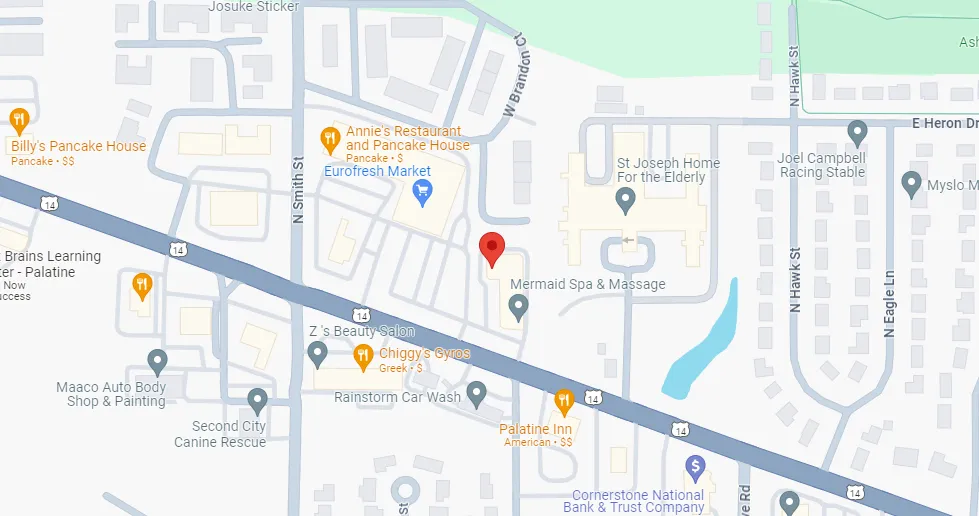
122 West Northwest Highway, Palatine IL 60067
Phone: (847) 750-3025
Email: tyler@starkeit.com
Copyright© 2026 Starke Industries - All Rights Reserved.