Find Everything You
Need.
Assessment

Let's Make Your Vision A
Reality
At Starke Industries, we specialize in customizable promotional items designed to elevate your brand's visibility. With a wide range of products tailored for effective marketing campaigns, we empower businesses to make a lasting impression on their audience.
Our mission is simple: to provide innovative marketing solutions that meet and exceed our clients' needs. From branded apparel to tech gadgets, we offer a diverse selection of practical and memorable promotional items for every occasion.
Your Customizable Marketing Merchandiser
Elevate Your Brand and Leave a Lasting Impression with Personalized Promotional Solutions Tailored to Your Business Needs. Stand Out in the Market, Engage Your Audience, and Drive Results with Customizable Merchandise from BrandBoost.
Frequently Asked Question
Can I customize the promotional items with my company logo?
Yes, we offer customization options to showcase your brand identity.
What types of promotional items do you offer?
We provide a diverse range of customizable merchandise for marketing.
What is the minimum order quantity for personalized items?
Minimum order quantities vary depending on the selected product.
How long does it take to receive my customized items?
Production times vary but are typically within 7-10 business days.
Do you offer rush shipping options for urgent orders?
Yes, we offer expedited shipping options for time-sensitive orders.
See Our Latest Blogs
Stay up-to-date with our latest insights, tips, and trends by diving into our newest blogs. Whether you're seeking industry expertise, marketing strategies, or product inspiration, our blog section is your go-to resource for valuable content.
Long-Term Athletic Development for Young Athletes
Your athlete is getting outworked. You see other kids in the program hitting weights harder, running faster intervals, doing plyometrics. The coach pushes for more volume. The AAU team schedule intensifies. You worry your kid is falling behind.
So you add another session. Sign them up for a strength program. Push them to train harder.
Here's the problem: the best thing you can do for your athlete's long-term performance is not put them in more training. It's make sure the training they're in is appropriate for where they are developmentally.
This is the core principle behind Long-Term Athletic Development (LTAD). And it runs counter to everything the current youth sports culture tells you.
What Long-Term Athletic Development Actually Means
LTAD is simple in theory, harder in practice: build physical qualities in the right sequence.
Your athlete's body is not a small adult. At 13, 14, or even 16, their nervous system, skeletal structure, connective tissues, and hormonal profile are still developing. They cannot adapt to training stress the same way a mature athlete can.
LTAD isn't about training less. It's about training smart.
The sequence matters. You don't teach someone to run before they can walk. You don't load the spine before the core has stability. You don't demand maximal speed when movement patterns are sloppy.
The traditional LTAD model builds like this: - Foundational phase: movement quality, basic strength, flexibility, coordination - Development phase: capacity building, work capacity, positional skills - performance phase: sport-specific intensity, power, advanced tactics
Most young athletes skip the foundation phase or compress it into weeks. Then coaches wonder why they plateau, get injured, or underperform when it matters.
This is actually why the Starke curriculum is sequenced the way it is. OWN YOUR MOTION (starkeit.com/courses/own-your-motion) builds the movement quality and range-of-motion foundation first—the work that unlocks what's possible. Once those movement foundations are established, Strength & Power (starkeit.com/courses/strength-and-power) builds capacity and structural resilience on top of that. And Speed Development (starkeit.com/courses/speed-development) comes from there—speed that's built on top of real strength and movement quality, not shortcuts.
The Early Specialization Trap
Your athlete is supposed to play multiple sports through age 12, ideally through age 14. Cross-sport training builds diverse movement patterns, reduces overuse injuries, and develops well-rounded athleticism.
But specialization is happening earlier. Kids commit to one sport at 10. They train 10+ months per year by 13. Travel teams demand intensity before bodies are ready for it.
The research is clear: early specialization doesn't produce earlier elite performance. It produces earlier burnout and higher injury rates. And it often caps the performance ceiling.
An athlete who specialized early missed movements and adaptations they would have built in basketball, gymnastics, or swimming. Their movement vocabulary is narrow. When they hit a growth spurt or face a new demand, they lack the physical foundation to adapt.
By contrast, an athlete who built broad movement quality, baseline strength, and work capacity through their early years can handle almost anything a coach asks of them.
What Readiness Actually Means
Here's where most training programs fail: they assume readiness based on age or sport level, not physical reality.
"Your athlete made the team, so they're ready for our program."
Wrong.
Readiness has three components:
Movement Quality. Can your athlete perform fundamental patterns without compensation? A squat without the knees caving in. A hinge without rounding the lower back. A single-leg stance without wobbling. Jumping and landing symmetrically. If movement quality is poor, loading these patterns doesn't build strength—it builds dysfunction. An athlete with poor squat mechanics doesn't need a heavy barbell. They need corrective work first. This is exactly what OWN YOUR MOTION addresses—it's the diagnostic and rebuilding phase that has to come before anything else.
Baseline Strength. Your athlete doesn't need to be strong to start a program, but they need to have basic structural strength. This means they can do bodyweight movements with control: push-ups with proper form, single-leg stands, carries, basic planks. If an athlete can't stabilize their own body, adding load is premature.
Range of Motion. A limited ankle, hip, or shoulder range of motion determines what an athlete can physically do. A tight-hipped athlete can't squat to depth. A stiff-shouldered athlete can't press safely. These aren't weaknesses to ignore—they're limits that determine what training is even possible. (See our related post on "Speed Training Starts with Movement Quality" for why this matters even for athletes who feel ready for advanced work.)
Many coaches test none of these things. They just hand a program to an athlete and see if they survive it.
What Happens When Athletes Skip the Foundation
The best-case scenario: your athlete doesn't get injured, but they plateau. They hit a ceiling because they never built the physical base to handle advanced training. By 17 or 18, more developed athletes pass them. (We cover this specifically in "The Three Training Mistakes High School Athletes Make"—mistake #1 is almost always skipping the foundation phase.)
The realistic scenario: compensation patterns accumulate. The tight hips become a knee problem. The weak core becomes a back problem. Asymmetries in strength become movement breakdowns under fatigue. By mid-season, your athlete is dealing with chronic pain, missing practices, or sidelined entirely.
The worst-case scenario: acute injury. An athlete with poor movement quality attempting a heavy deadlift. An athlete with no rotational stability attempting explosive cuts. These don't always end careers, but they set your athlete back 6–12 months just as they're supposed to be developing.
But there's another cost nobody talks about: the performance ceiling. An athlete who trained without foundations never developed the resilience, movement sophistication, or capacity base that elite athletes have. They can't handle the volume or intensity of elite training because they skipped the years that taught their body how. This is why even speed development requires that earlier strength foundation—you're trying to express power from a position that was never stable.
The Parent Concern: "But They'll Fall Behind"
This is the pressure that drives most bad decisions. Other kids are lifting heavy, running hard, training year-round. If your athlete doesn't do the same, they'll lose spots. Fall out of the program. Miss opportunities.
Here's the reframe: your athlete will fall behind if their training exceeds their readiness.
An athlete doing a program that's too intense for their foundation will: - Move poorly, reinforcing bad patterns - Get sore and fatigued without getting stronger - Miss practices due to soreness or injury - Get frustrated and lose confidence
An athlete who spends 8–12 weeks building movement quality and baseline strength will: - Move better, making every subsequent session more effective - Adapt faster to training load - Stay healthy and miss fewer sessions - Build confidence in their body
By month four or five, the athlete with proper foundations is accelerating. The athlete who trained recklessly is dealing with injuries or stalled progress.
You're not behind if you're slower to start. You're ahead.
How Starke Identifies Readiness
This is where assessment changes everything.
Starke Industries doesn't assume your athlete is ready based on age, sport, or intentions. We assess them. (This is exactly what "Baseline Testing: Why Your Athlete Needs One Before Starting Any Program" is all about—and why it's the first step before putting anyone into a curriculum.)
The baseline assessment answers these questions: - How's your athlete's movement quality? Where are the breakdowns? - What's their baseline strength capacity? What can they do with control? - Where are their range of motion limitations? What's preventing them from moving well? - Are they symmetrical left-to-right? Or favoring one side? - How does their nervous system respond to basic movement demands?
This assessment isn't complicated, but it's specific. We're not running a generic fitness test. We're identifying whether an athlete has the physical foundation for the training they want to do.
From there, the first 4–8 weeks look completely different depending on what the assessment showed. This is where the curriculum becomes clear—some athletes start with OWN YOUR MOTION because their foundation needs rebuilding. Others are ready to move into Strength & Power faster. The assessment tells us.
Example: A 15-year-old committed to starting a serious strength program.
Assessment findings: Good knee control, but very limited hip range of motion (tight hips from years of mostly sport-specific movement). Poor shoulder mobility. Baseline strength is adequate but asymmetrical—right side stronger than left. No rotational stability.
What happens next: the first eight weeks aren't about loading. They're about unlocking that hip mobility, addressing the shoulder limitation, building symmetry, and establishing rotational stability. The athlete is training hard, but the intensity is movement quality and mobility work, not barbell loading.
By week nine, when they finally do add load, it's intelligent. They can move well through the range required. Their nervous system is ready. Left-right imbalances have been addressed. That strength program is now efficient instead of risky.
Compare this to an athlete who skips assessment and walks into a program assuming they're ready: tight hips means limited squat depth, which means compensation at the knee and lower back. Shoulder issues mean pressing problems. Asymmetries mean injuries waiting to happen.
The second athlete isn't working harder. They're working broken.
The Starke Framework: Assess → Analyze → Train → Re-test
This is how we build appropriate training.
Assess. Initial baseline testing that identifies movement quality, strength capacity, and limitations. You and your athlete know where the starting point actually is.
Analyze. We don't just collect data. We interpret it. What do these findings mean? What's the priority? What's limiting performance? What needs to be built first?
Train. The program is written based on readiness, not assumptions. If movement quality is the limiting factor, we build that. If asymmetries are the issue, we address them. If range of motion is locked up, we unlock it. Every phase builds on the previous phase.
Re-test. Every 4–8 weeks, we reassess. Has movement improved? Are baseline markers stronger? Have we cleared the limitations? This tells us when to progress and when an athlete needs more work at the current level. Your athlete isn't guessing about progress. You see it.
This isn't a generic gym with generic programs. This is assessment-driven training that respects your athlete's actual readiness.
Practical Application: What You Can Do Now
You don't need to wait for an assessment to start thinking about readiness.
Ask your coach: Has my athlete been tested for movement quality? Can they show you what they're looking for? What are the limiting factors you've identified? If the answer is "we don't really test," that's worth noting.
Observe your athlete in training. Do they move the same way every rep? Do they maintain positioning under fatigue? Or do they break down? If they break down, the intensity is too high for their foundation.
Ask yourself: Is the extra training solving a real problem, or is it anxiety-driven? If your athlete is healthy, developing normally, and progressing in their sport, more training probably isn't the answer. If they're stalled or struggling with repeated soreness, something is wrong with how they're training, not how much.
Consider cross-training. A diverse movement background builds resilience and movement sophistication. A high school athlete training in one sport 10 months a year is building narrowly.
Most importantly: find someone who will assess your athlete before deciding what training is appropriate. Not after.
The Starke Difference
Starke Industries exists because the standard approach fails too many athletes. We don't assume readiness. We measure it. We don't apply one program to twenty athletes. We individualize based on what the assessment shows.
Your athlete might be ready to start a heavy strength focus. Or they might need 8 weeks of mobility and movement quality work first. We find out through assessment, not guesswork.
That process—Assess → Analyze → Train → Re-test—is what keeps your athlete healthy, moving well, and actually making progress instead of just surviving the volume.
The data tells us what your athlete is ready for. And that's how we build long-term performance.
Understanding the Full Development Sequence
If you want to understand how the full development sequence works—from movement quality to power to speed—explore the Starke curriculum at starkeit.com/courses.
Each course is designed to build on the previous one: - OWN YOUR MOTION establishes the movement foundation - Strength & Power develops capacity and resilience - Speed Development expresses performance from that foundation
Or start with a consultation to figure out where your athlete is in that sequence: starkeit.com/assessment. We'll identify which phase they should be in and what needs to happen first.

About Us
At Starke Industries, the mission is to bridge the gap between the medical and fitness industries to optimize human performance. As the first stage of preventative medicine, evidence-based practices and comprehensive assessments, create customized data-driven training programs. This ensures the effectiveness, long-term health and the ability to reach full potential, whether you're an elite athlete or focused on overall fitness.


Contact Us
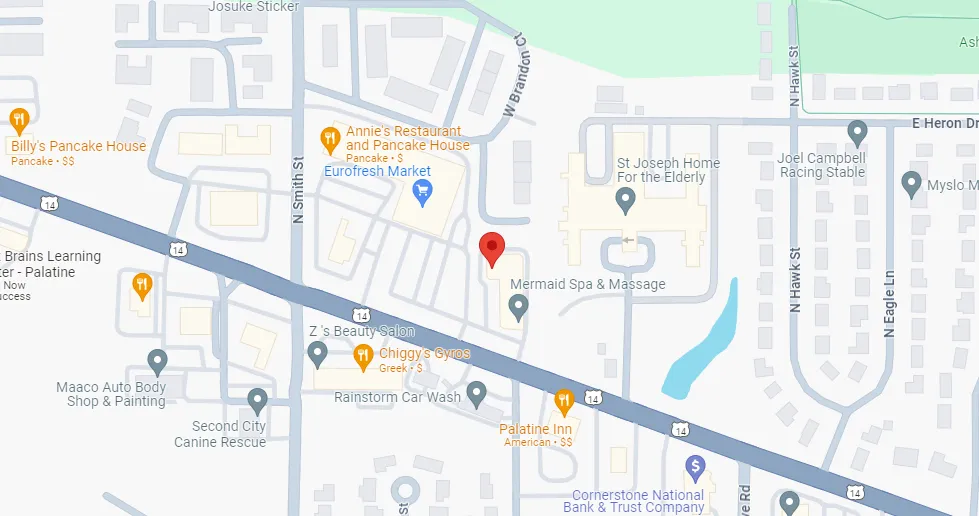
122 West Northwest Highway, Palatine IL 60067
Phone: (847) 750-3025
Email: tyler@starkeit.com
Copyright© 2026 Starke Industries - All Rights Reserved.